Southeast Asia is packed with incredible places to visit. Thailand has its temples, street food, and legendary islands. Vietnam has its mountains, cities, and food culture. Indonesia has Bali, volcanoes, and some seriously impressive landscapes. Malaysia mixes modern cities with rainforests, islands, and different cultures.
Then there's the Philippines.
At first glance, it might seem like the Philippines should fit neatly into the Southeast Asian travel scene. It has tropical beaches, islands, mountains, markets, rice fields, and plenty of delicious food.
But spend a little time here, and you'll notice that the Philippines feels different.
Part of it comes from its geography. The country is made up of more than 7,000 islands, creating a travel experience that can change dramatically from one place to another.
But geography isn't the whole story.
Centuries of trade, Spanish colonial rule, American influence, Asian connections, indigenous cultures, and local traditions have all shaped the Philippines into something that doesn't quite resemble any of its neighbours.
And that's what makes travelling here so interesting.
You can spend the morning swimming in turquoise water, eat Filipino food for lunch, hear someone switch between English and Filipino during a conversation, pass a Spanish-era church in the afternoon, and end the day drinking San Miguel beer at a roadside barbecue spot.
It's familiar and unfamiliar at the same time.
Here's why the Philippines stands out from the rest of Southeast Asia.
The Philippines Is an Island Country on a Different Scale
Let's start with the obvious: islands.
The Philippines is an archipelago made up of thousands of islands spread across a huge area of the western Pacific.
That changes the way you travel.
In many Southeast Asian countries, you can travel overland for hours or even days and still remain within the same country. In the Philippines, getting from one major destination to another can mean taking a plane, ferry, fast boat, or a combination of different types of transport.
And while that can occasionally make travel more complicated, it also means there is an enormous amount of variety.
You can go from the busy streets of Manila to the beaches of Palawan, the mountains of northern Luzon, the surfing towns of Siargao, or the diving areas of the Visayas.
These places don't feel like slightly different versions of the same destination.
They can feel like completely different trips.
Every Island Has Its Own Personality
This is one of the best things about travel in the Philippines.
Palawan can feel relaxed and remote.
Siargao has a strong surf and island lifestyle.
Cebu combines beaches, mountains, diving, nightlife, and urban life.
Bohol mixes countryside, wildlife, beaches, and historic sites.
Northern Luzon has mountains, rice terraces, pine forests, and communities with very different traditions from those in the capital.
And then you have smaller islands where the biggest decision of the day might be where to swim before sunset.
The country doesn't have one single travel experience.
It has hundreds.
English Is Everywhere
This is one of the biggest differences you'll notice as a foreign traveller.
English is widely spoken throughout the Philippines, particularly in cities, tourist destinations, hotels, restaurants, and businesses.
You'll see English on signs, menus, advertisements, government forms, transportation information, and everyday conversations.
Filipinos commonly switch between English and Filipino in the same conversation, too.
You might hear someone say something like, "Wait lang, I'll check," or "Let's go na."
This mix of languages can sound completely natural to Filipinos but pretty amusing to visitors hearing it for the first time.
For travellers, though, it makes things much easier.
Asking for directions is generally straightforward. Ordering food is rarely a guessing game. Talking to locals doesn't always require a translation app.
Even in smaller towns, you'll often find someone who can communicate in English.
That doesn't mean every Filipino speaks perfect English, of course. But compared with many destinations around Southeast Asia, the language barrier can be surprisingly low.
The Philippines Has a Strong Western Influence
Walk around Southeast Asia, and you'll notice that each country has been shaped by different historical influences.
The Philippines has an especially strong Western influence compared with many of its neighbours.
More than 300 years of Spanish colonial rule had a major impact on Filipino culture, religion, architecture, names, food, and traditions.
Then came more than four decades of American colonial rule, which further influenced education, government, entertainment, language, sports, and everyday life.
The result is a country that can sometimes feel surprisingly familiar to Western travellers.
You'll see Catholic churches standing in town centres.
Basketball courts are everywhere.
American movies, music, and fast-food chains are deeply familiar.
English is widely used.
Filipino names often have Spanish origins.
But at the same time, this isn't simply a Westernised version of Asia.
Local Filipino traditions, indigenous cultures, Chinese influence, and centuries of Asian trade are still deeply connected to everyday life.
It's this unusual combination that gives the Philippines its own character.
Catholicism Is Part of Everyday Life
Religion is another major difference.
The Philippines is predominantly Catholic, making it very different from many other Southeast Asian destinations where Buddhism, Islam, Hinduism, or other religions have a stronger presence.
In many Philippine towns, the church is one of the most prominent buildings.
Fiestas can become major community events.
Religious processions can bring entire neighbourhoods together.
And during Holy Week, some towns become almost completely focused on religious traditions.
You don't have to be religious to notice how much Catholicism has influenced Philippine culture.
You'll see it in architecture, festivals, family traditions, street names, public holidays, and even everyday expressions.
Some churches are also among the country's most impressive historic attractions.
So if you're interested in history and architecture, don't skip the old churches when travelling around the Philippines.
They tell a major part of the country's story.
Filipino Food Doesn't Taste Quite Like Its Neighbors
If you've travelled around Southeast Asia, you may be expecting Filipino Food to taste similar to Thai, Vietnamese, Malaysian, or Indonesian cuisine.
It doesn't.
Filipino cuisine has its own thing going on.
Soy sauce, vinegar, garlic, pork, chicken, seafood, rice, and grilled meats appear frequently, but Filipino cooking also reflects Chinese, Spanish, American, and indigenous influences.
Take adobo. It's probably one of the most recognisable Filipino dishes, but there isn't one single recipe for it. Families and regions have their own versions. Then there's sinigang, a sour soup that can be made with pork, seafood, beef, or vegetables. Lechon is another must-try, especially during celebrations.
And if you're exploring Filipino street food, you'll run into things like barbecue, fish balls, kwek-kwek, isaw, and balut.
Filipino food can also be surprisingly sweet.
That's particularly noticeable with desserts and drinks.
Halo-halo is probably the perfect example: shaved ice mixed with sweet beans, fruit, jellies, leche flan, and other ingredients, usually finished with evaporated milk or ice cream.
It's chaotic.
It's colourful.
And somehow, it works.
Filipino Hospitality Is a Big Part of the Experience
You'll probably hear the phrase "Filipino hospitality" a lot when reading about the country.
It's easy for travel articles to turn that into a cliché, but there is something worth paying attention to.
Filipinos tend to be social and welcoming, particularly when guests are involved.
You might be offered food even when you didn't ask for any.
A local might recommend somewhere to eat.
Someone may start chatting with you while you're waiting for a ride.
If you're invited to a Filipino home, don't be surprised if "just have some food" turns into an entire meal.
Family and community are important parts of Filipino culture, and that often shows up in how people interact with visitors.
Of course, not every interaction will be magical. The Philippines is a real country with crowded cities, frustrating traffic, scams, bad weather, and all the normal annoyances that come with travel.
But the friendliness of ordinary interactions can make a big difference.
Basketball Is Everywhere
Here's something that might surprise travellers: basketball is huge in the Philippines.
Really huge.
You don't have to look far to find a basketball court.
In many neighbourhoods, especially outside major commercial areas, you'll see courts where kids and adults play throughout the day.
Basketball has become deeply embedded in Filipino culture, partly because of American influence.
The NBA also has a massive following in the country.
You might see someone wearing a Lakers, Warriors, Celtics, or other NBA jersey while walking around a small provincial town.
It's one of those little cultural details that makes the Philippines feel different.
Football is much more dominant in many other parts of Southeast Asia.
In the Philippines, basketball often wins.
The Beaches Are Only Part of the Story
The Philippines is famous for its beaches, and honestly, the reputation is deserved.
Boracay has its famous white sand.
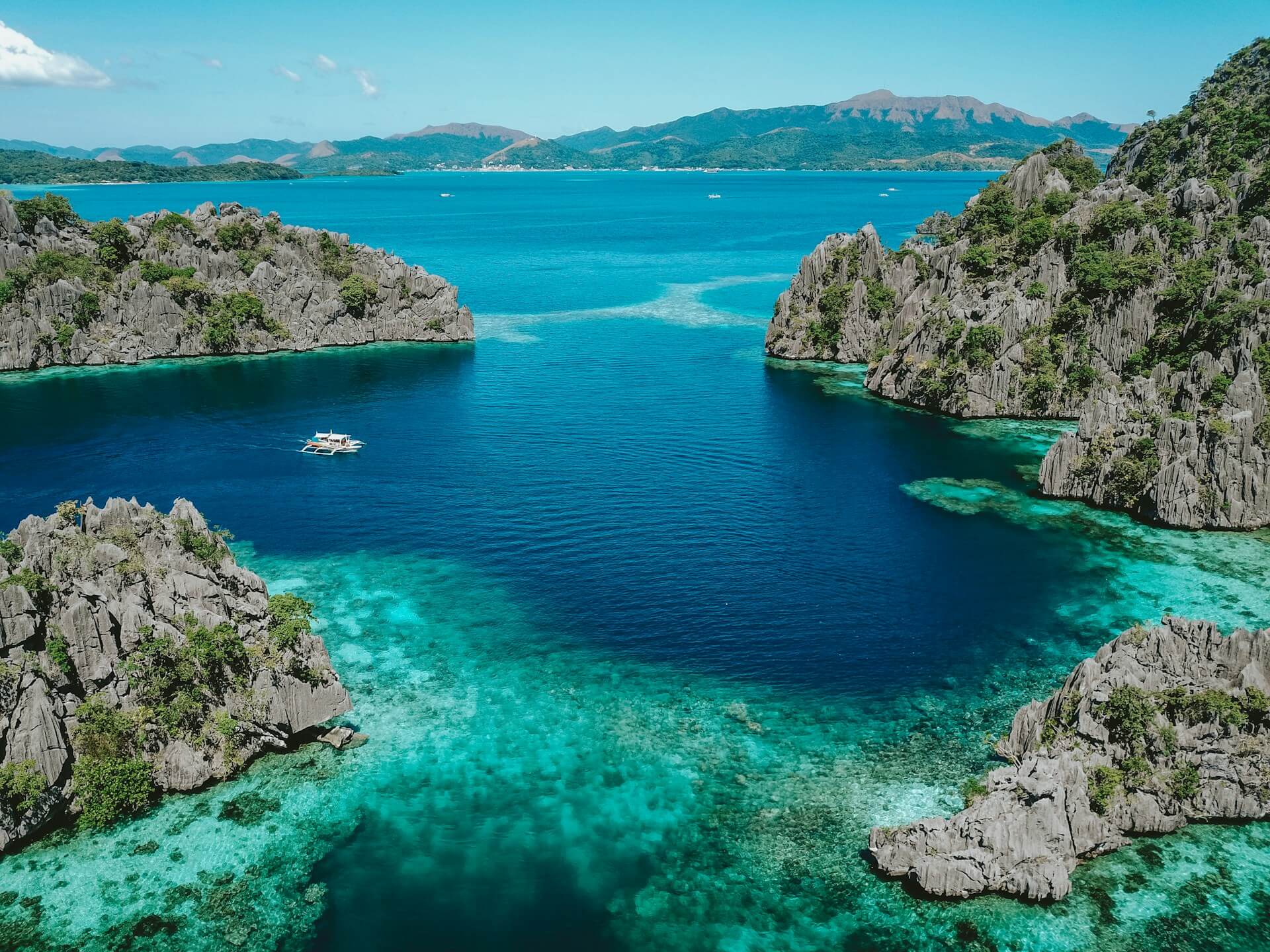
Palawan has dramatic limestone cliffs and clear water.
Siargao combines surfing with island life.
The Visayas has countless beaches and diving destinations.
But here's the thing: you shouldn't visit the Philippines only for the beaches.
Some of the country's best travel experiences are inland.
Head north, and you'll find mountains and rice terraces.
Visit the Cordillera region, and you'll see landscapes that look completely different from the tropical postcard image of the Philippines.
Explore Negros, and you'll encounter historic towns and old houses connected to the country's sugar industry.
Travel around Bohol, and you'll find countryside, rivers, hills, caves, wildlife, and historic churches.
The Philippines can be a beach destination, but it doesn't have to be.
The Mountains Are Seriously Underrated
When people picture the Philippines, they usually imagine palm trees and beaches.
But the country's mountainous areas deserve much more attention.
Northern Luzon is especially interesting for travellers who prefer hiking and cooler weather.
The Cordillera has dramatic mountain scenery, rice terraces, waterfalls, and communities with long histories and distinct traditions.
The Banaue Rice Terraces and surrounding areas are obvious highlights, but you don't have to stop there.
There are hiking trails, mountain towns, waterfalls, caves, and viewpoints throughout the region.
And because the Philippines is tropical, the contrast can be pretty wild.
One day you could be sweating on an island beach.
The next, you could be wearing a jacket in the mountains.
That's one country.
Philippine Cities Have Their Own Kind of Chaos
Manila can be overwhelming.
Traffic can be brutal.
The city is crowded, noisy, humid, and constantly moving.
But that's also part of its personality.
Manila is not the kind of city where you necessarily fall in love with it immediately.
You have to spend some time with it.
Look beyond the malls and business districts, and you'll find old neighbourhoods, food markets, historic sites, art spaces, hidden bars, local restaurants, and communities that have been here for generations.
Other cities offer completely different experiences.
Cebu City has a mix of urban life, beaches, mountains, nightlife, and history.
Iloilo is known for its food, heritage, and more relaxed pace.
Davao offers access to nature while still feeling like a major city.
Baguio has a cooler climate and a completely different atmosphere from the lowland cities.
The Philippines doesn't really have one "city experience."
Each major city has its own personality.
Filipino Music and Entertainment Feel Familiar
There's another interesting cultural difference you'll notice: Filipinos love entertainment.
Karaoke is practically a national pastime.
You don't need to visit a fancy bar to find people singing.
It can happen at home.
At a birthday party.
At a neighbourhood gathering.
At a resort.
At a random restaurant.
And yes, someone will probably choose a power ballad that is wildly ambitious for their vocal range.
Filipinos also have a strong connection with Western pop music, Hollywood movies, and international entertainment.
This creates an interesting mix where local and international pop culture exist side by side.
A Filipino party can go from local songs to American pop hits to classic ballads without missing a beat.
The Philippines Can Feel Surprisingly Familiar—and Completely New
Maybe that's the biggest reason the Philippines feels different.
There are moments when it feels very familiar.
You can communicate in English.
American fast food is everywhere.
Basketball is huge.
Western music plays in restaurants.
Then suddenly you're eating grilled seafood on a tiny island, riding a motorbike through a rural village, watching a local fiesta, or hiking through mountains.
The culture isn't entirely one thing.
It's a mix created by geography, migration, trade, colonial history, indigenous traditions, and modern influences.
And that mix shows up everywhere.
In the food.
In the architecture.
In the language.
In the music.
In the way people socialise.
Even in the way towns and cities look.
So, What Makes the Philippines Different?
There isn't one single answer.
It's the combination.
The Philippines has the tropical landscapes you'd expect from Southeast Asia, but its history and culture have taken a different path.
It has thousands of islands, but each region can feel distinct.
It has strong Asian roots, but centuries of Spanish and American influence are impossible to miss.
It has modern cities, but traditional communities remain important.
It has world-famous beaches, but also mountains, forests, waterfalls, caves, heritage towns, and busy urban centres.
And because English is widely spoken, it's often relatively easy for international travellers to connect with people along the way.
That's what makes travel in the Philippines so interesting.
You don't have to choose between a cultural trip and a beach trip.
You can do both.
You can spend the morning exploring an old church, eat lechon for lunch, hike in the afternoon, sing karaoke at night, and catch a boat to another island the next day.
It may share the tropical climate and island appeal of other Southeast Asian destinations, but the overall experience is distinctly Filipino.
And honestly, that's the fun of visiting.
Don't come expecting the Philippines to be another Thailand, another Bali, or another Vietnam.
Come expecting the Philippines to be itself.
Because once you get past the beaches, you'll realise there's a lot more here to discover.